How to Ensure Brand Consistency Across All Platforms

December 15, 2025

Brand consistency means keeping your brand's look and message the same everywhere. From your logo and colors to your voice and values, your customers should get the same experience across all platforms. When done right, it builds trust with your audience and helps your business grow.


According to Capital One Shopping Research, 33% of companies confirm that brand consistency helps them increase their revenue by 20% or more. If your brand feels different on Instagram than it does on your website, you're leaving a lot of money on the table.


Consistent branding ensures that you remain the same, whether you're looking at a billboard or scrolling through social media. When your audience knows what to expect from you, they are more likely to stick around and spend more.

What Is Brand Consistency?

Brand consistency is about showing up the same way every single time before your customers. Your brand image strategy needs to cover several key elements:

  • Your values and messaging: These features need to align.
  • Your visual identity: Includes your logo, color palette, fonts, and design style.
  • Your voice and tone: The way you write and speak to customers should feel consistent.


When these elements work together, you create a strong brand that people remember and trust. If they notice that your brand elements don't match up, they will abandon your business.


How Do You Measure Brand Consistency?

You can't improve your brand consistency if you can't measure it. Marketing consistency needs regular check-ups to make sure you're staying on track.

Start by conducting a brand audit. Look at all your social media accounts, website, packaging, and any other customer touchpoints. Do they all feel like they belong to the same brand?


Use tools like brand tracking surveys to ask customers about their perception of your brand. Their feedback will help you know if your consistent branding efforts are working.


Set up regular reviews. Check your social media monthly and audit your website quarterly. Additionally, review all marketing materials at least twice a year.


What Are the Benefits of Brand Consistency?

Brand consistency delivers real, measurable results for your business branding. Let's break down exactly what you gain when you nail this.


Increased Revenue

Brand consistency helps you make more money. Reports from Branding Strategy Insider show up to 23% revenue increases from consistent presentation. When customers know what to expect, they're more likely to buy from you again.


Better Employee Alignment

Your team needs to understand what your brand stands for. Clear, consistent brand guidelines help everyone pull in the same direction.


Professional Appearance

Inconsistent branding looks sloppy and unprofessional. It makes people wonder if you pay attention to details. Consistent branding shows you care about quality in everything you do.


Better Brand Recognition

You want people to spot your brand instantly. Straits Research found that using signature colors boosts brand recognition by 80%. If you use the same visual elements everywhere, you become impossible to ignore or forget.


How Do You Approach Maintaining Brand Consistency Across Multiple Platforms?

Maintaining brand consistency across multiple platforms takes planning and discipline. But it's absolutely doable. Here's your roadmap.


Create Comprehensive Brand Guidelines

Your brand guidelines should answer every question someone may have about representing your brand. Ensure you create a detailed document that covers everything. Good brand guidelines should:

  • Include your logo specifications with exact measurements and spacing requirements
  • Provide your color codes in multiple formats such as, CMYK
  • List approved fonts with download link
  • Define your brand voice with specific examples of dos and don'ts
  • Add your mission statement, core values, and key messages


Additionally, include templates for common materials like social media posts. The more complete your guidelines, the easier it is for everyone to stay consistent.


Use Assets Libraries

Build a central asset library where team members can access approved logos, images, graphics, and other brand elements. Cloud storage services will work great. Make sure everything is organized and clearly labeled.


Train Your Team

Your brand guidelines are useless if people don't understand them. Invest in training periodically. When someone joins your company, teach them about your brand and show them the guidelines.


Monitor and Audit Regularly

Set up a regular monitoring schedule. Assign someone to check your social media feeds weekly to see if they follow the guidelines. Do deeper audits quarterly or twice a year, looking at whether your website, email campaigns, print materials, and packaging are consistent.


Keep Communication Open

Business branding requires coordination across your entire company. Keep lines of communication open between departments and hold regular meetings to discuss brand-related issues. If everyone in your company feels involved in protecting the brand, they're more likely to do it well.


Frequently Asked Questions


What Is an Example of Branding Consistency?

Nike is a perfect example of branding consistency in action. Their iconic swoosh logo appears everywhere they operate. It looks the same on shoes, clothing, advertising, and digital platforms. The company has maintained this visual identity for decades while allowing subtle evolution.

Their "Just Do It" tagline reinforces consistent messaging. Nike speaks to athletes and everyday people with the same encouraging tone.


What Is the 3-7-27 Rule of Branding?

The 3-7-27 rule explains how many times people need to see your brand before they take action. After three exposures, people start recognizing your brand. They may think, "I've seen that logo before."


Then, after seven exposures, people remember your brand. Lastly, after 27 exposures, people trust your brand enough to take action. They'll visit your website and make a purchase, showing how brand consistency really pays off.


What Are the 4 V's of Branding?

The 4 V's of branding are vision, value, voice, and visual. Vision shows where you're going, while value is what you offer to customers. Your voice is how you communicate, and visuals are what people see in your brand.


Elevate Your Business Performance With Dependable Brand Consistency

The longer you maintain brand consistency, the stronger your business becomes. Proper consistency ensures you build an asset that grows more valuable year after year.


Partner with Bolt Marketing, built on excellence through our actionable lead scoring that boosts conversions faster than industry averages, proven in local campaigns done since 2010. Our handcrafted community insight audits deliver hyper-personalized strategies that make your business stand out.


Contact us today and generate leads effortlessly.

May 21, 2026
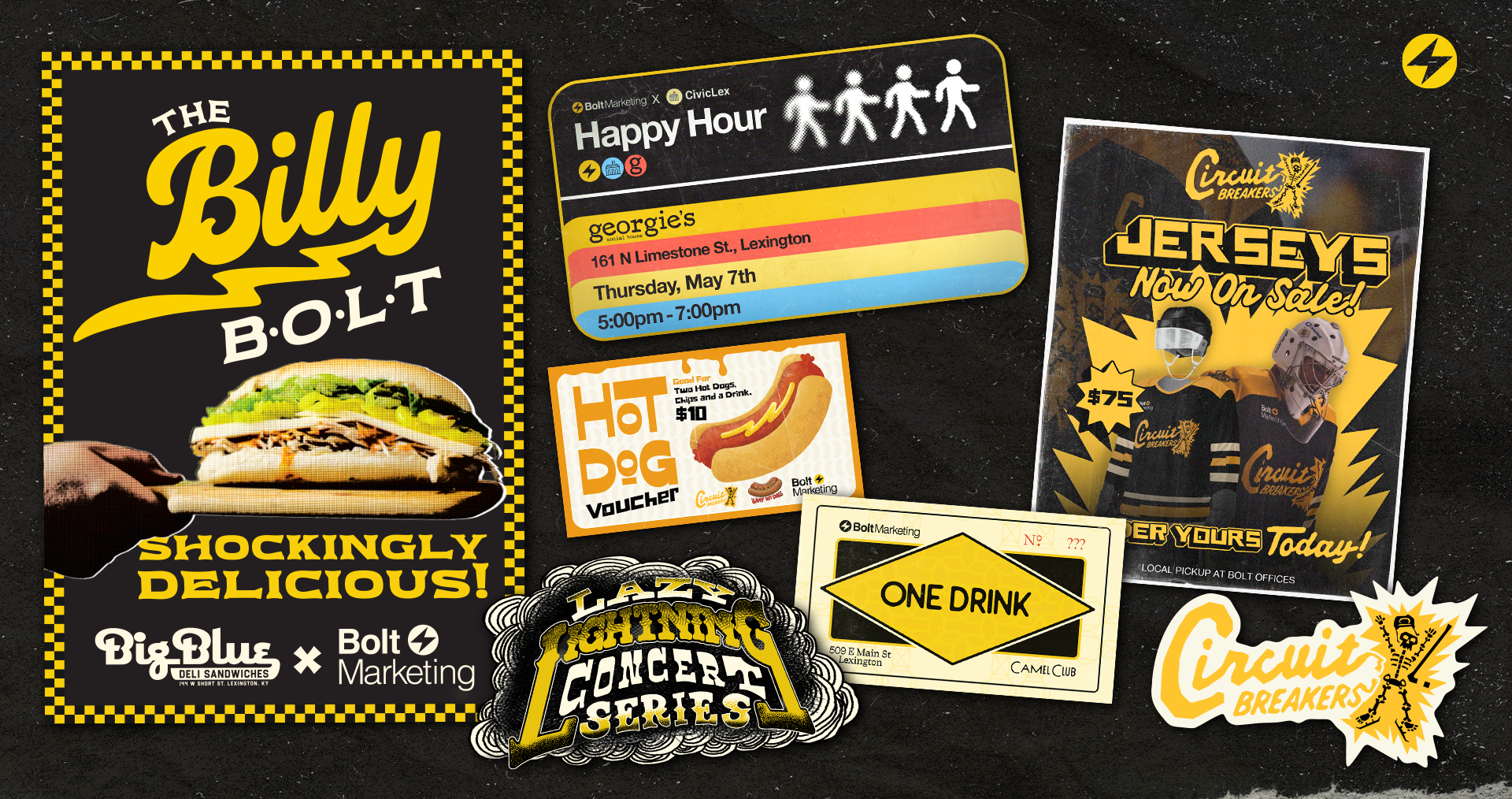
Brand collaborations can grow your business by helping you reach new audiences that are likely to trust and purchase from you. They drive actual sales because your business benefits from the credibility that another brand has built with its customers, making your marketing feel more trustworthy from the beginning. As a result, you can attract higher-quality leads and make it easier for potential customers to confidently choose your business. A Nielsen survey shared by Business News Daily reveals that 92% of consumers trust friends and family recommendations over all other advertising sources when making a purchasing decision. This trust-based behavior is a major reason strategic collaborations are so effective. When a respected business recommends your brand, customers are more likely to engage and buy with less hesitation. What Are Brand Collaborations and How Do They Work? Brand collaborations are partnerships between businesses that work together to reach a shared audience and achieve a specific goal . These partnerships help you expand visibility, improve trust, and generate qualified leads through shared marketing efforts. Unlike one-sided promotions, successful collaborations create value for both businesses and their customers. Most collaborations succeed because each business contributes something useful to the partnership. This may include: Audience trust Industry expertise Marketing reach Complementary services For instance, a website designer can partner with a copywriter to provide complete website packages. A fitness studio can collaborate with a nutrition coach to create wellness programs. These partnerships solve broader customer problems while increasing exposure for both businesses. The strongest strategic partnerships focus on audience alignment rather than industry similarity. How Can Brand Collaborations Increase Sales Faster Than Traditional Marketing? Conventional advertising needs time to build trust with your audience from the ground up. Brand collaborations remove that barrier because your business is introduced through a source the customer already trusts. This makes potential customers more receptive and more likely to take action. This trust advantage enhances key areas of the buying process, including: Lead quality Conversion rates Purchase confidence Unlike traditional ads, customers discover your business within a trusted context. They are receiving a recommendation within a trusted context, which shortens decision-making time and transfers credibility between brands. That being said, both traditional advertising and brand collaborations require your business to have marketing foundations to work off of like messaging, a website, and clear products and services. Collaborations also share marketing responsibilities between partners. You gain exposure, leads, and sales without carrying the full cost alone. This makes collaborative marketing a cost-effective growth strategy for small and medium-sized businesses. What Types of Brand Collaborations Work Best for Small Businesses? Not every collaboration serves the same purpose. Some partnerships focus on visibility, while others support lead generation or customer retention. The right approach depends on your business goals and audience. Audience-Sharing Partnerships Audience-sharing collaborations help businesses reach new potential customers through existing communities. These partnerships often include: Email newsletter swaps Podcast interviews Guest blog content Social media features The goal is to present your business to a highly relevant audience. Audience quality is more significant than audience size. A smaller audience with a strong interest in your services will usually outperform a larger but less targeted audience. A good example of an audience-sharting partnership is GoPro and Red Bull . Co-Branded Offers and Bundles Co-branded offers combine related services into one solution. These campaigns simplify decision-making for customers while increasing perceived value. Examples include: Web design and copywriting packages Photography and event planning services Real estate and home staging solutions These brand alliances work well because customers often need multiple connected services at the same time. Bundled offers help businesses increase referrals and cross-selling opportunities naturally. Content and SEO Collaborations Content collaborations support long-term visibility and authority. Businesses can work together on: Joint blog posts Case studies Educational videos Industry guides These campaigns bolster SEO performance by generating backlinks , enhancing authority, and increasing referral traffic. As part of broader business growth strategies, content collaborations continue producing value long after the campaign ends. To support this, at Bolt Marketing, we emphasize clear messaging and structured content that improves visibility and search relevance. How to Structure a Brand Collaboration Strategy That Converts A collaboration needs structure before execution begins. Without it, even strong partnerships lose direction and miss measurable outcomes. A strong structure includes: Defined objective Assigned roles Aligned messaging Execution timeline Follow-up plan Each element keeps both parties accountable throughout the campaign. Without this foundation, activities become disconnected, and results become harder to measure. Treating structure as a non-negotiable starting point is what separates collaborations that convert from those that simply look good on paper. Frequently Asked Questions How Do You Choose the Right Brand Partner? Choosing the right brand partner starts with understanding whether both businesses serve the same type of customer in a complementary way. The goal is not industry similarity but audience alignment and shared trust potential. Focus on: Customer overlap Service complementarity Brand reputation Communication consistency Client experience quality A strong partnership should naturally resonate with your customers without requiring explanation. If the connection is obvious and relevant, the collaboration is more likely to yield conversions. How Do You Measure Whether a Brand Collaboration Is Working? A successful collaboration is measured by how well it contributes to real business outcomes, not just engagement or exposure . It's essential to track performance against clear goals established before the campaign begins. Key metrics to track include: Leads generated Sales conversions Bookings or inquiries Referral traffic Customer acquisition cost Lead quality These indicators show whether the collaboration is producing meaningful business growth or just surface-level attention. Strong results should enhance both conversions and customer quality in comparison to your typical marketing efforts. That being said, sometimes the goal of a brand collaboration is simply for fun and to get involved in the community. Marketing isn’t a rigid discipline. If you’re a local handyman and want to collaborate with a local ice cream shop for a fun flavor, you’ll still get great exposure and will likely have a successful campaign even though it breaks some of the “rules” stated above. Here at Bolt Marketing, we collaborated with a local hockey team to help them get their name out in the community and for our team to have fun. There wasn’t an extreme overlap in audience, but we count it as a great success. How Long Should a Brand Collaboration Run to See Results? Referral-based collaborations can exhibit measurable engagement within days. Content-driven partnerships typically take several weeks to build momentum. Stronger outcomes are usually seen when collaborations are repeated over time rather than treated as one-off efforts. Achieve Consistent Growth Through Brand Collaborations  Brand collaborations work best when built with clear goals and the right partners. When structured well, they increase visibility, trust, and sales. Focus on alignment and consistency so every collaboration supports steady, long-term business growth. At Bolt Marketing, we offer small business owners foolproof services that will actually grow your business. Led by CEO and Founder Chase Fairchild, our in-house team delivers messaging, branding, strategy, advertising, and digital solutions built on proven marketing fundamentals. We focus on clarity and execution so you can reach the right audience and compete with confidence. Contact us to learn how we can support your business growth.
April 28, 2026
The right logo design can change how the world sees your business. It communicates your values, builds trust, and creates instant recognition. Knowing the latest trends helps you stay ahead of your competitors and make a lasting impression. According to Demandsage, 60% of companies with consistent branding showed 20% revenue growth. This number isn't small. With the right logo design, you can also boost your revenue. Unfortunately, most businesses, especially small businesses, underestimate the power of a great logo. Your logo lives on your website, your social media, your packaging, and your business cards. It is the foundation of your brand. Every time someone sees it, they form an opinion about your business. Whether you're building a brand from scratch or refreshing an existing one, Bolt Marketing can help make your logo a powerful visual asset.
March 15, 2026
A strong brand identity begins when you define your North Star and clarify your guiding purpose. Next, master visual storytelling and find your distinct voice to express value with clarity. Then know your tribe and prioritize radical consistency to build trust across every customer touchpoint. Shapo reports that half of consumers tend to choose brands they recognize with ease. Familiar brands feel safer because people expect reliable quality and predictable experiences each time. Clear positioning helps your business stand out in crowded markets and attract the right audience. Consistent visuals, tone, and service reinforce recognition across websites, packaging, and social channels. Strong alignment between message and experience builds confidence and encourages repeat engagement. Over time, recognition grows into loyalty, supporting steady growth and stronger referrals.
February 15, 2026
The first thing that people recognize about a brand or company is its logo. Logo design services help brands communicate their values, quality, and ownership to potential customers by highlighting their mission. According to a study by Cognitive Market Research & Consulting, the logo design software market worldwide is expected to grow at a CAGR of 10.58% from 2025 to 2033. Most companies worldwide are realizing the benefits of logo design in maintaining a unique brand identity.
January 12, 2026
Choosing the right website developers can have a direct impact on how your business grows online. The team you choose will shape how customers find you, trust you, and decide to take action. Making the wrong choice often leads to wasted time, poor results, and unnecessary costs. More than 70% of small businesses now have a website, which shows just how important a strong online presence has become. However, simply having a site is no longer enough. Quality web development services help businesses stand out, capture leads, and support long-term growth. At Bolt Marketing, we help small businesses build websites that actually work, without inflated agency pricing. If you are looking to hire web designers with real business experience, this guide will help. In this post, we share five expert tips to help you choose the right website developers.
November 17, 2025
If your brand is sending mixed messages, lacks clarity, or fails to connect with the right audience, then you're likely experiencing the effects of bad branding that's holding your business back. By evaluating your visual identity, messaging, and customer perceptions, you can uncover the weak spots and take steps toward stronger growth and engagement. Have you ever wondered why some companies with solid offerings still struggle to gain traction? According to Exploding Topics, around 81% of consumers say they need to trust a brand before buying from it. Today we're taking a closer look into how bad branding impacts your business, how to achieve brand image improvement, and more!
October 31, 2025
In just a few steps, Instagram business advertising can expand your brand's reach, deepen engagement, and drive conversions by leveraging targeted ad campaigns and creative formats tailored to your audience. With the right strategy, brands can use Instagram ads to reinforce identity, attract ideal customers, and amplify social media marketing outcomes more efficiently than relying solely on organic growth. Have you ever wondered why your content rarely reaches even a portion of your followers? That's because algorithm limits restrict organic visibility. Today we're taking a closer look into how Instagram business advertising complements your Instagram growth strategies and how to run ads on Instagram that resonate.
October 3, 2025
Hiring a professional web development company is one of the smartest decisions you can make for your business. A strong website is no longer optional. It is the foundation of your marketing and a tool that works for you around the clock.
August 28, 2025
A post by LLCBuddy reveals that 87 percent of customers begin their searches for products online.
July 16, 2025
According to the World Economic Forum, 68% of customers in the United States prefer buying from businesses whose brands align with their values. This portrays the importance of having a brand vision. As a small to medium-sized business owner in Kentucky, you've heard a lot about creating a strong brand vision and why it's important. To attract high-quality customers, you need to come up with a valuable product and excel beyond your competitors. With a well-defined vision, your business strategy will match the needs of your customers. Below is a detailed guide on how to create a strong brand vision that resonates.
More Posts